
Science, Technology, and Society LET REVIEWER
General Education
Lesson 26
Anthropogenic Impact on Natural Systems

Human Effects on the Environment
 |
| Image from CITA |
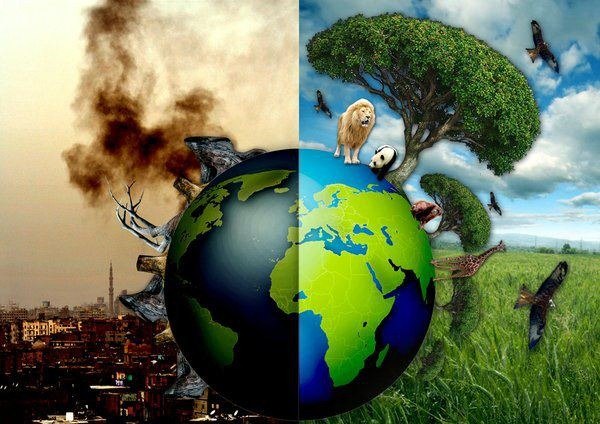
Humans affect the environment every day through things like burning fuel, building factories, farming, and throwing away waste. These actions can change the air, water, and living things around us. In this lesson, we will focus on three major issues: air pollution, global warming, and water pollution, including eutrophication.
Air Pollution and Acid Rain
 |
| Image from NPS GOV |
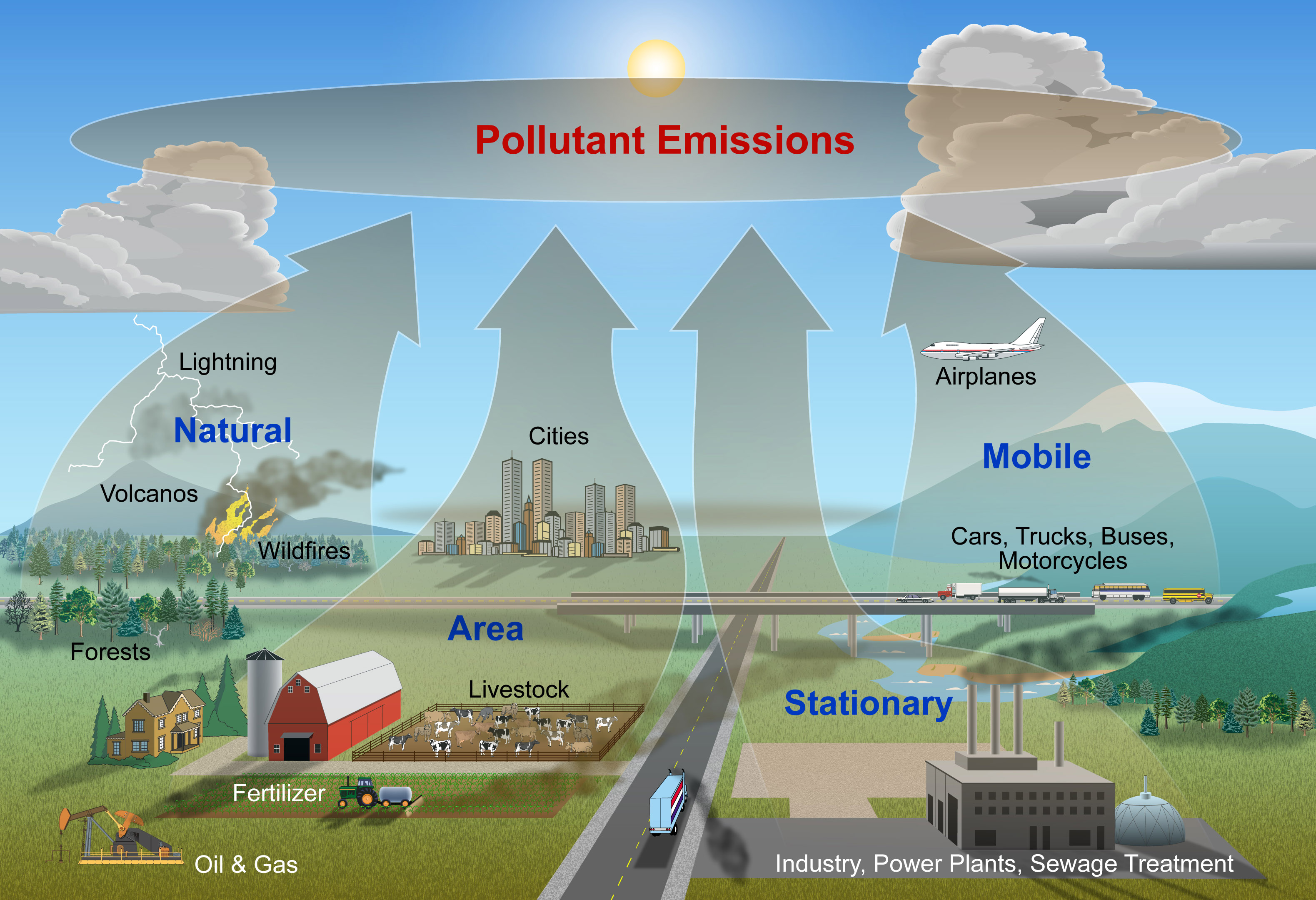
Air
pollution happens
when harmful gases and particles are released into the atmosphere. Two
important groups of pollutants are nitrogen oxides (NOₓ) and sulfur
oxides (SO₂ / SOₓ). These gases mostly come from burning fossil fuels in
power plants, factories, and vehicles.
When NOₓ
and SOₓ rise into the atmosphere, they can react with water vapor and other
chemicals to form acids. These acids then fall back to Earth in rain,
snow, or fog. This is called acid rain. Acid rain does not mean the rain
feels like strong acid on your skin, but its pH is lower than normal rain, and over
time it can damage the environment.
 |
| Image from Department of Environment Conservation |
Acid rain
can harm plants, soils, lakes, and even buildings.
It can make lakes and rivers too acidic for fish and other organisms to survive.
It can also damage leaves, weaken trees, and speed up the wearing away of stone
structures and monuments.
- Air pollution includes gases
like NOₓ and SO₂ / SOₓ.
- Acid rain is caused by NOₓ and SOₓ
reacting with water in the air.
- Acid rain can harm plants,
animals, water bodies, and buildings.
Greenhouse Effect and Global Warming
 |
| Image from National Park Service |
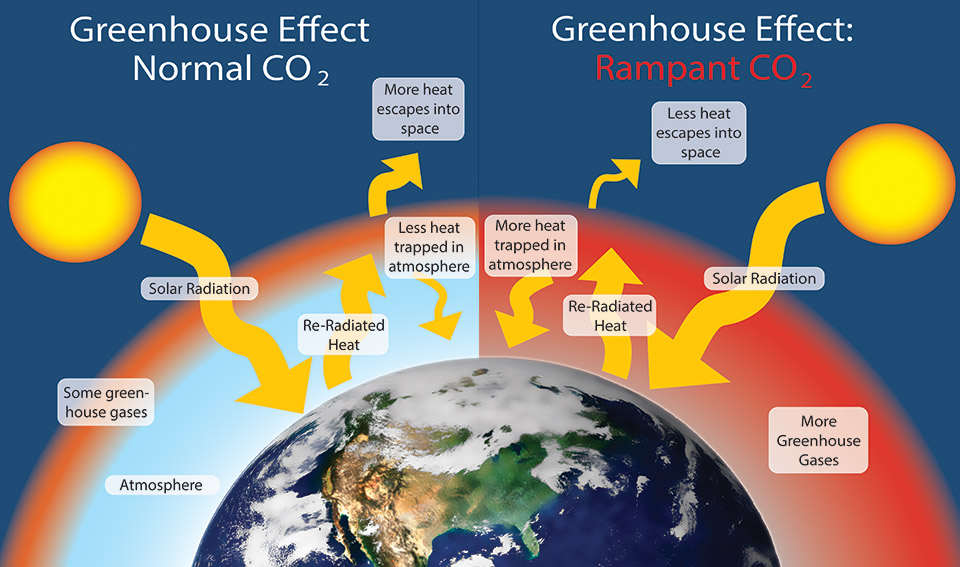
The greenhouse
effect is a natural process that helps keep Earth warm enough for life. The
atmosphere acts like a thermal blanket made of carbon dioxide (CO₂)
and other gases. Sunlight comes in through the atmosphere and warms Earth’s
surface. Earth then gives off heat (infrared radiation), and greenhouse gases trap
some of this heat, sending it back toward the surface. Without any
greenhouse effect, Earth would be too cold for most life.
The
problem happens when human activities add too much CO₂ and other
greenhouse gases (like methane and nitrous oxide) to the atmosphere. Burning
coal, oil, and gas for energy, cutting down forests, and some farming practices
increase the accumulation of CO₂ and other gases. When the “thermal
blanket” becomes thicker, more heat is trapped, and the average
temperature of the planet rises.
This
overall increase in Earth’s average temperature is called global warming.Global warming is caused by an increase of CO₂ in the
atmosphere which results in a rapid increase in temperature. Global
warming can lead to melting ice caps, rising sea levels, stronger storms, heat
waves, and changes in where plants and animals can live.
- Greenhouse effect = thermal
blanket of CO₂ and other gases that trap heat from the Sun.
- Human activities increase CO₂
and other greenhouse gases.
- Global warming is the rise in Earth’s average temperature due to extra greenhouse gases.
Water Pollution
 |
| Image from Wallpapers |
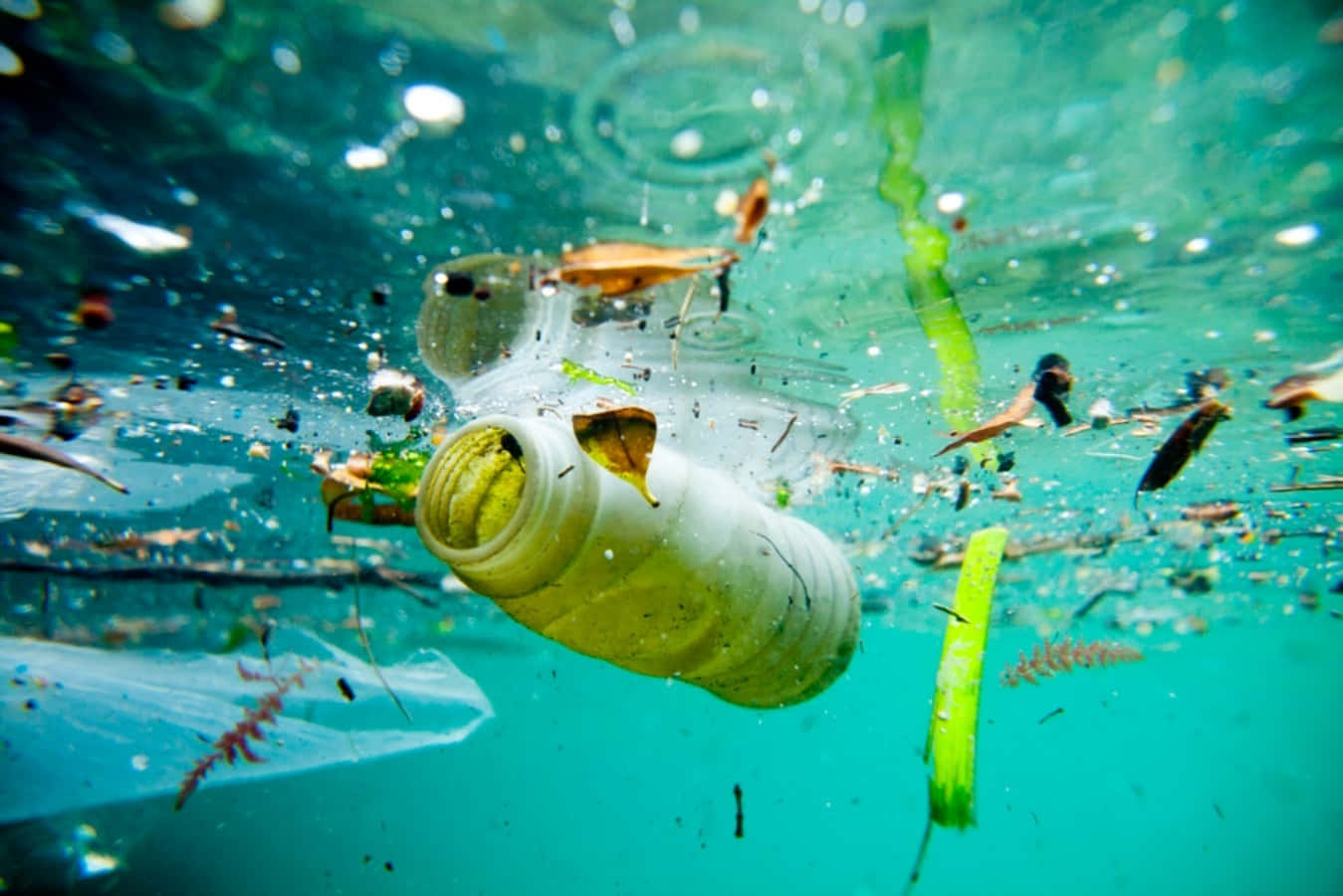
Water
pollution happens
when harmful substances enter rivers, lakes, seas, or groundwater. This can
make the water unsafe for drinking, swimming, fishing, and for the plants and
animals that live there. There are two main types of water pollution sources: point
source and non‑point source.
 |
| Image from TPT |
Point
Source Pollution
comes from a single, easily identified place. For example, a pipe from a
factory or a sewage outlet that directly pours waste into a river is a point
source. Point source pollution includes pipelines from large
factories, septic tanks, and other places that directly pour wastes
into bodies of water. Because we can see where the pollution is coming from, it
is often easier to trace and regulate.
Non‑point
Source Pollution
comes from many smaller sources and is harder to track. Instead of one
pipe, pollution might wash off large areas of land. For example, when rainwater
flows over farms, streets, and construction sites, it can pick up fertilizers,
pesticides, oil, trash, and soil. This mixture of pollutants then runs into
rivers or lakes. Since it comes from many places at once, we cannot point to a
single source.
- Point source pollution – source is easily
identified, like a factory pipe or septic tank outlet.
- Non‑point source pollution – source cannot be easily
identified and may come from many places (runoff from fields,
roads, etc.).
Eutrophication and Algal Blooms
 |
| Image from BYJU'S |
One
serious result of water pollution is a process called eutrophication
(also called hypertrophication). This usually happens when too many
nutrients, especially nitrogen and phosphorus (often from fertilizers and
sewage), enter a body of water. While nutrients are normally good for plant
growth, too much of them can cause problems.
 |
| Image from Yon-Ka Paris |
When a
lake or river receives high levels of nutrients, it can lead to an algal
bloom. An algal bloom is a rapid increase in the amount of algae in the
water, making the water look green or cloudy. At first, it might seem like a
sign of rich life, but it can actually be harmful. When the algae die, they
sink to the bottom. Decomposers (like bacteria) break down the dead
algae, and this process uses up a lot of dissolved oxygen in the water.
As oxygen
levels drop, fish and other aquatic animals may not have enough oxygen to
survive. This can lead to fish kills and the loss of other aquatic life. High nutrients cause algal bloom →
increase in algae → reduced oxygen (O₂) due to decomposition → death of
fish/sea harvest.
- Eutrophication = too many nutrients in
water.
- Algal bloom happens when algae grow
rapidly because of high nutrients.
- Decomposition of dead algae reduces
oxygen, leading to the death of fish and other aquatic life.
Anthropogenic Impact on Natural Systems Quiz
