
Science, Technology, and Society LET REVIEWER
General Education
Lesson 24: Earth’s Four Spheres

What
is Earth’s Four Spheres?
Imagine
you are looking at Earth from outer space. You see blue oceans, white clouds,
brown and green land, and signs of life everywhere. These are not separate
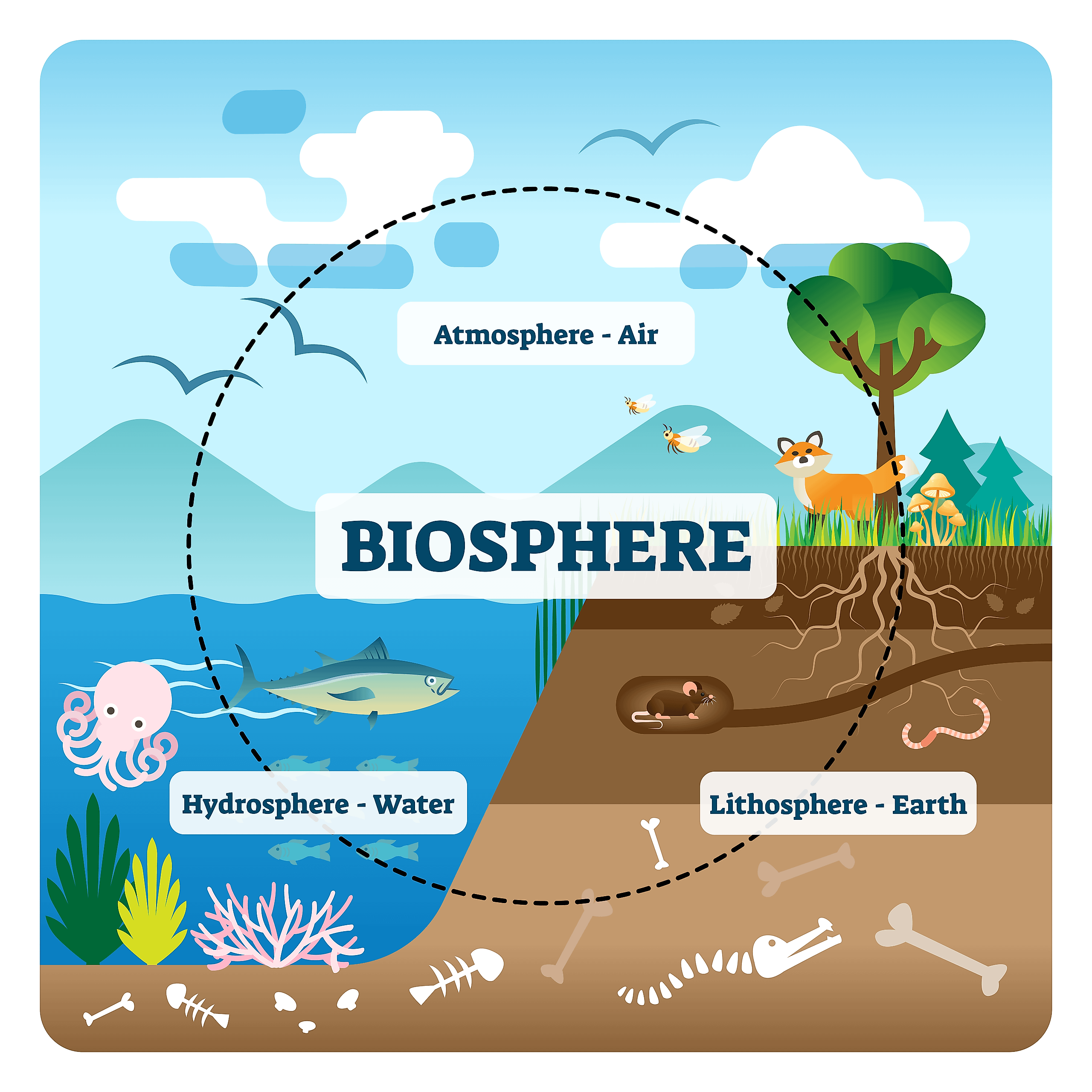
pieces; together, they make up four main subsystems called the lithosphere,
hydrosphere, atmosphere, and biosphere.
 |
| Image from World Atlas |
- The
Lithosphere is the solid land: rocks, mountains, soil, and the
Earth’s crust.
- The
Hydrosphere is all the water: oceans, rivers, ice, and even water
underground.
- The
Atmosphere is the layer of gases (air) surrounding Earth.
- The
Biosphere is all living things: plants, animals, and tiny
organisms.
These
spheres are interconnected. For example, rain (hydrosphere) falls
through the air (atmosphere) onto soil (lithosphere), helping plants grow (biosphere).
- Four
main spheres: lithosphere, hydrosphere, atmosphere, biosphere
- Each
sphere is a different “part” of Earth (land, water, air, life)
- All
four are connected and affect each other
Lithosphere:
The
lithosphere is the solid, rocky part of Earth. It includes the surface
where we stand and the rigid upper part of the mantle beneath it. This is where
mountains, valleys, continents, and the ocean floor are found. The lithosphere
provides the foundation for all land ecosystems and holds important resources
like soil, minerals, and metals.
 |
| Image from National Geographic |
The
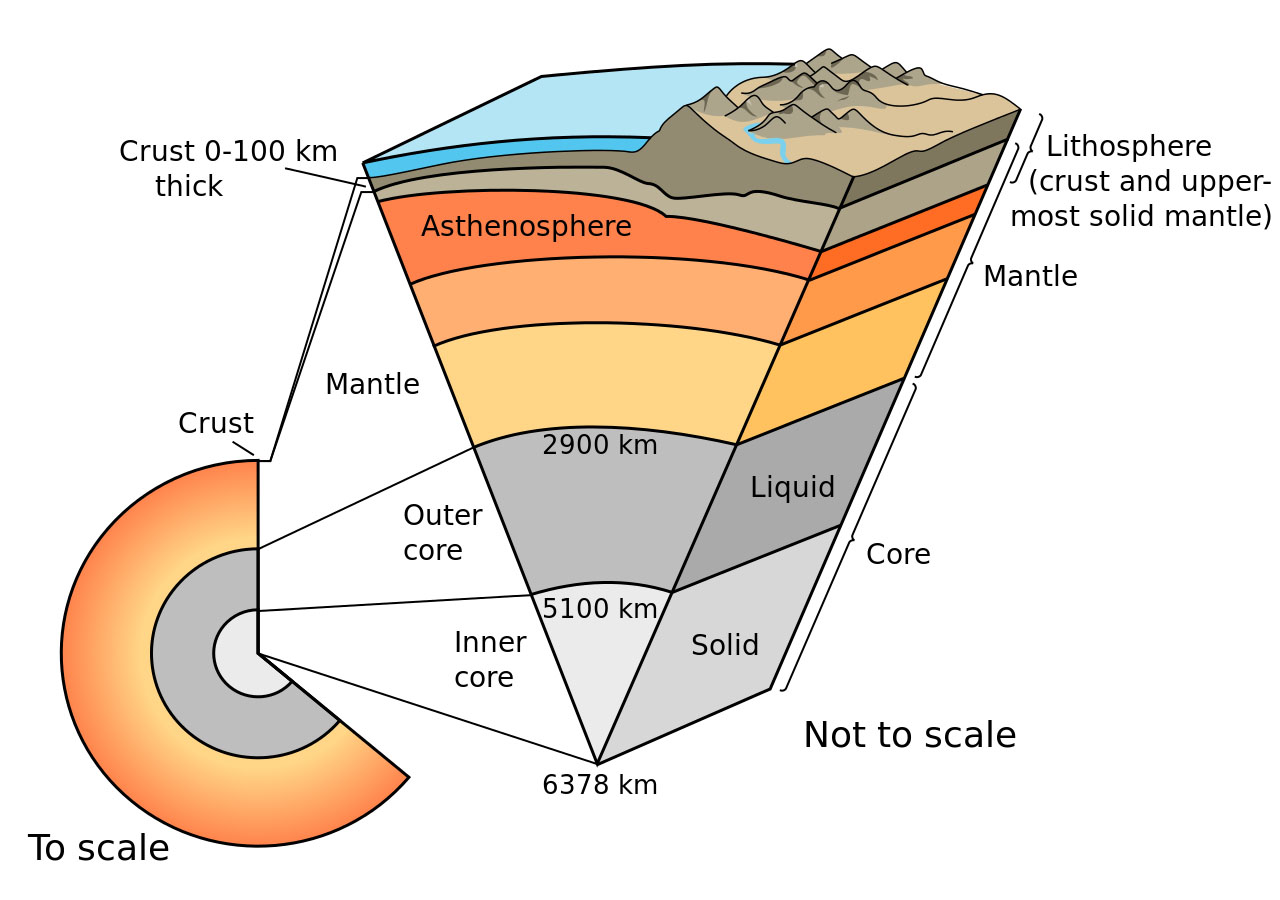
outermost layer of the lithosphere is the crust. The crust is Earth’s
surface layer and is relatively thin compared to the whole planet. There are
two main types of crust. The oceanic crust lies beneath the oceans; it
is thinner, younger, and made mostly of dense basaltic rock. The continental
crust forms the continents; it is thicker and made mainly of lighter,
granitic rocks. Beneath the crust is the mantle, a thick rocky layer
rich in elements like silicon (Si), oxygen (O), iron (Fe), magnesium (Mg),
and calcium (Ca). The rigid crust plus the uppermost solid mantle together
form the lithosphere.
Deeper
inside Earth is the core, the innermost central part. The outer core
is liquid and is made mostly of iron and nickel; its movement helps
create Earth’s magnetic field. The inner core is solid and also made
mainly of iron (and nickel), but it stays solid because of the extremely high
pressure.

- Lithosphere
= crust + upper mantle (solid rock layer)
- Crust:
- Oceanic
crust – thinner, denser, basaltic rock
- Continental
crust – thicker, granitic rock
- Mantle: thick rocky layer, rich in Si,
O, Fe, Mg, Ca
- Core:
- Outer
core – liquid iron and nickel
- Inner
core – solid iron (and nickel)
Atmosphere:
The
atmosphere is the layer of gases that surrounds Earth and is held in
place by gravity. Without the atmosphere, there would be no air to breathe, no
weather, and no protection from harmful radiation. The atmosphere also helps
keep Earth’s temperature in a range that allows life.
 |
| Image from Labeled Science Diagrams |
The
air is made mostly of two gases: about 78% nitrogen (N₂) and 21%
oxygen (O₂). The remaining small fraction (about 1%) includes argon (Ar),
carbon dioxide (CO₂), and other trace gases. Even though they are
present in small amounts, gases like carbon dioxide are very important for
controlling climate and supporting photosynthesis in plants.
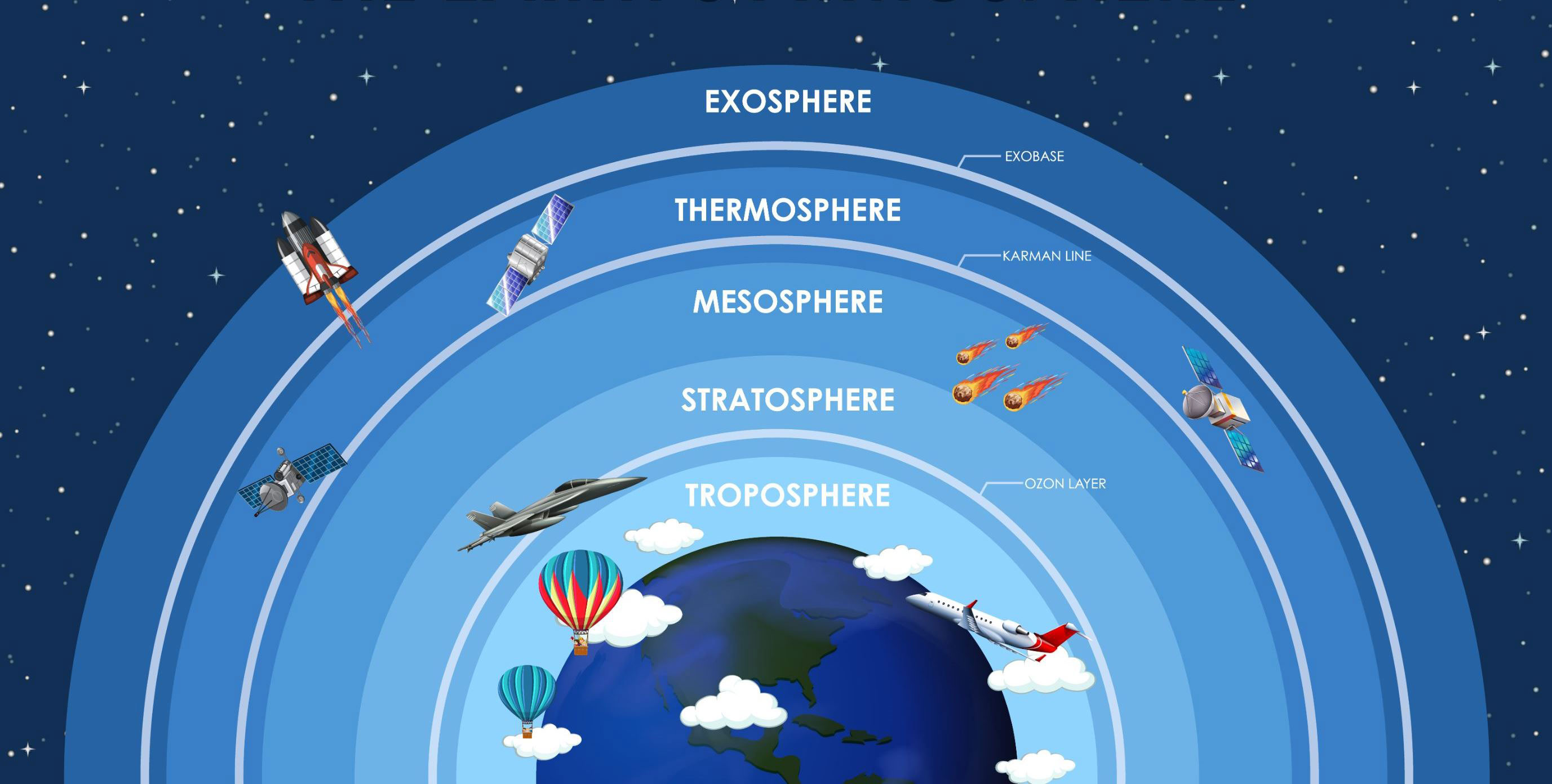
The
atmosphere is divided into layers. The lowest layer is the troposphere,
where almost all weather happens clouds, rain, storms, and winds. Above that is
the stratosphere, which contains the ozone layer. The ozone layer
protects life on Earth by absorbing most of the harmful ultraviolet (UV) rays
from the Sun. Higher layers (like the mesosphere, thermosphere, and exosphere)
are important too, but for basic Earth Science, the troposphere and
stratosphere are the main ones to remember.
- Atmosphere
= layer of gases around Earth
- Main
gases: about 78% nitrogen, 21% oxygen, plus CO₂, Ar, and
others
- Troposphere: lowest layer, where weather
occurs
- Stratosphere: contains ozone layer,
blocks harmful UV rays
- air to breathe, weather, and temperature
regulation
Storms:
- Typhoon: Occurs in the Northwest Pacific Ocean, affecting East Asia (e.g., Japan, Philippines, China).
- Cyclone: Occurs in the Indian Ocean and South Pacific Ocean.
- Hurricane: Occurs in the Atlantic Ocean, Caribbean Sea, and the Northeast/Central Pacific Ocean (e.g., U.S. East/West coasts, Hawaii).
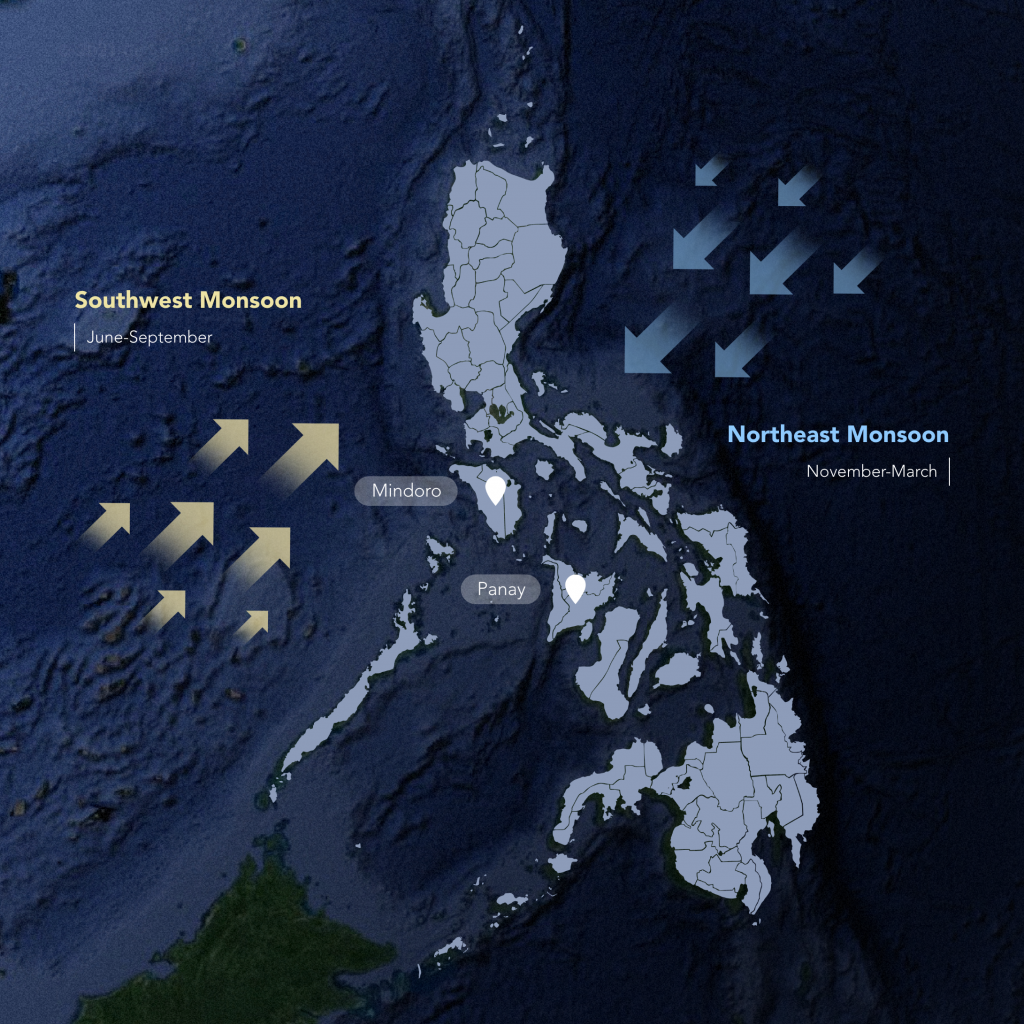
Philippine Two Major Monsoons
 |
| Image from Marine Science Institute |
Amihan (Northeast Monsoon)
- From November to March.
- Brings cool, dry air from Siberia and Northern China.
- Results in pleasant, lower
humidity and cooler temperatures, especially in the mornings. It is
considered the "high season" for tourism due to the favorable
weather.
Habagat (Southwest Monsoon)
- From June to October.
- Brings warm, moist air from the Indian Ocean.
- Frequent heavy rainfall, high humidity, and powerful storms or typhoons. It often causes significant flooding and landslides, particularly on the western side of the country.
Hydrosphere:
The
hydrosphere includes all the water on Earth, in any form. This means not
only the oceans, but also rivers, lakes, groundwater, glaciers, ice caps, and
even water vapor in the air. Water can exist as a liquid, solid,
or gas, and it constantly moves through the water cycle evaporating,
forming clouds, falling as rain or snow, and flowing back to the oceans.
 |
| Image from Quizlet |
Most
of Earth’s water about 97% is salt water in the oceans. Only
around 3% is fresh water, and most of that is locked up in ice
(glaciers and ice caps) or stored deep underground. This means only a small
part of Earth’s water is easily available for humans, plants, and animals to
use for drinking and daily life.
Water
also helps transport heat around the planet. Ocean currents move
warm water from the equator toward the poles and cold water back toward the
equator. This helps regulate climate and affects weather patterns in many
regions.
- Hydrosphere
= all water on Earth: oceans, rivers, lakes, ice, groundwater,
water vapor
- Water
states:
- Liquid – oceans, rivers, lakes,
groundwater
- Solid
(cryosphere)
– glaciers, ice caps
- Gas – water vapor in the air
- Only
about 3% of Earth’s water is fresh, and most of that is in ice
- supports life and moves heat via ocean currents
Five Oceans
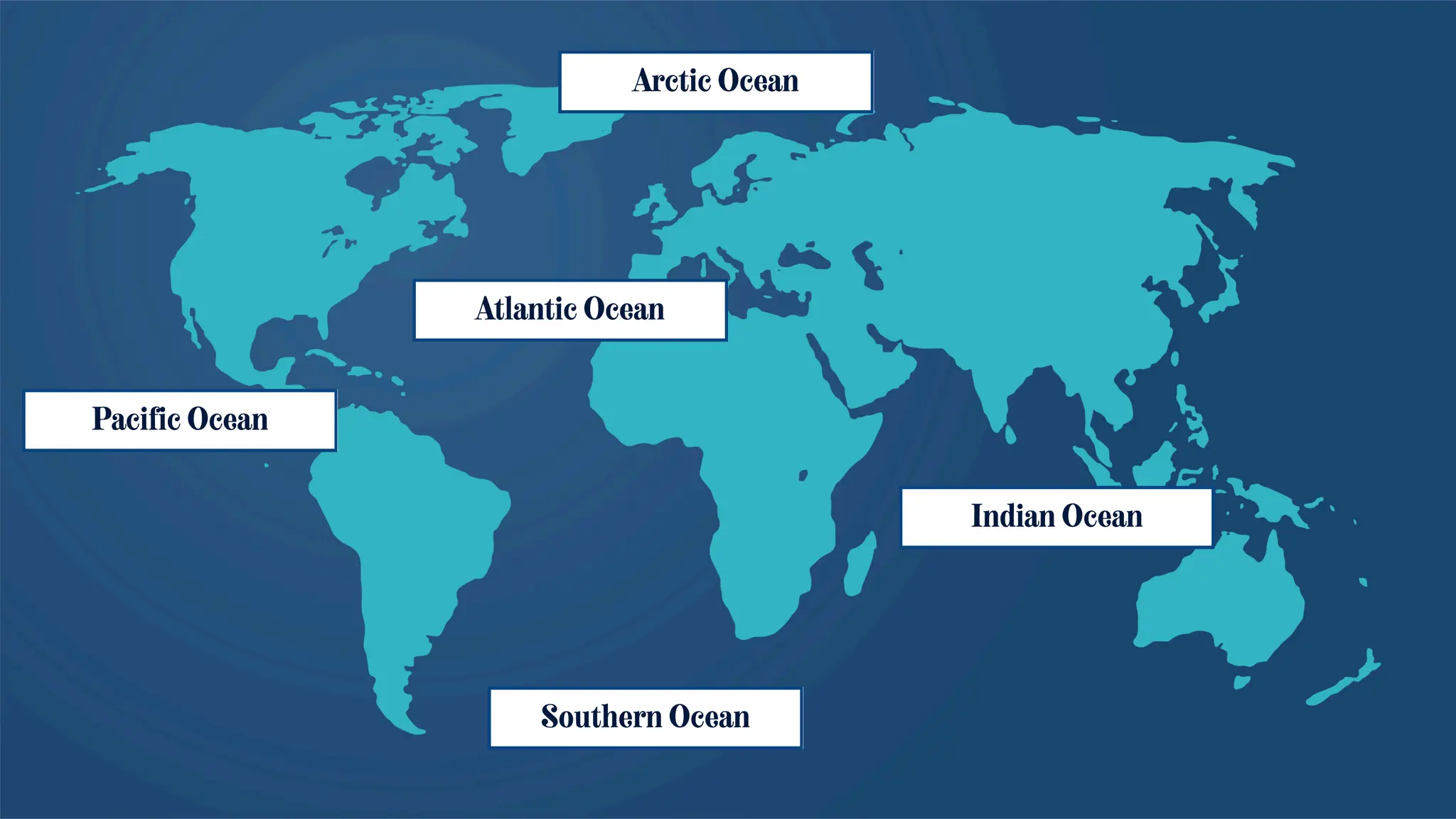
- Pacific Ocean - world's largest and deepest ocean, covering about one-third of the planet's surface.
- Atlantic Ocean - second-largest ocean, famously separating the Americas from Europe and Africa.
- Indian Ocean - third-largest and warmest ocean, bordered by Africa, Asia, and Australia.
- Southern Ocean - youngest recognized ocean, defined by the cold waters completely surrounding Antarctica.
- Arctic Ocean - smallest, shallowest, and coldest ocean, centered around the North Pole.
Biosphere:
The
biosphere is the part of Earth where life exists. It includes all
living things, from tiny bacteria to giant trees and whales. The biosphere does
not have sharp boundaries; it extends wherever life can survive down into the
soil, high into the atmosphere where microbes and birds can be found, and deep
into the oceans, even in dark trenches.
 |
| Image from BYJU's |
Within
the biosphere, all living things interact with each other and with the other
spheres. Life on Earth depends on energy from the Sun. Plants, algae,
and some bacteria use sunlight to make their own food in a process called photosynthesis.
They are called producers. Animals and other organisms that eat plants
or other animals are called consumers. Together, producers and consumers
form food chains and food webs, which show how energy moves
through the biosphere.
Living
things also help keep the gases in the atmosphere in balance. For
example, plants take in carbon dioxide (CO₂) and release oxygen (O₂)
during photosynthesis, while animals (and plants at night) breathe in oxygen
and release carbon dioxide. This exchange helps maintain the levels of these
gases in the atmosphere.
- Biosphere
= all living things on Earth
- Includes
life in soil, air, and oceans
- Producers (plants) use sunlight to make
food; consumers (animals) eat plants or other animals
- cycles gases like CO₂ and O₂, helps keep
the atmosphere balanced
How the Four Spheres Interact
The
four spheres are not separate. They are always interacting. A change in
one sphere can cause changes in the others. This is why we say Earth works as a
system.
When
water evaporates from the ocean (hydrosphere), it rises into the air
(atmosphere), forms clouds, and eventually falls back as rain, which can soak
into soil (lithosphere) and help plants (biosphere) grow. When plants
(biosphere) take in carbon dioxide from the air (atmosphere) and water from the
hydrosphere, they use energy from the Sun to make food and release oxygen back
into the atmosphere. Animals drink water (hydrosphere), breathe air
(atmosphere), and live on land or in the water (lithosphere and hydrosphere).
Here
are some simple interaction examples:
- Atmosphere ↔ Hydrosphere:
Evaporation from oceans and lakes sends water vapor into the atmosphere. This water vapor condenses into clouds and falls as rain, snow, or hail. - Hydrosphere ↔ Biosphere:
Animals and plants need water to survive. Fish live entirely in water, and land animals drink water and absorb it from food. - Atmosphere ↔ Biosphere:
Plants use carbon dioxide (CO₂) from the atmosphere for photosynthesis and release oxygen (O₂), which animals need to breathe. - Lithosphere ↔ Biosphere (you can add this for
completeness):
Plants grow in soil, which comes from rock. Animals dig burrows, build nests, and get minerals from the ground.
Earth’s Four Spheres Quiz
