
Science, Technology, and Society LET REVIEWER
General Education
Lesson 17: Ecosystem
(ECOLOGY)

What is Ecology?
Ecology is the study of ecosystems, which means how living things interact with each other and with their environment. Ecologists look at plants, animals, and microorganisms and how they use air, water, soil, and sunlight in a given area.
- Ecology is about how living things and their surroundings work together like parts of one big community.
What is an Ecosystem?
 |
| Image from CollegeSearch |
An ecosystem is the relationship between living (biotic) things and non-living (abiotic) things in a particular place. Both living and non-living parts are needed for the ecosystem to function properly.
Biotic and Abiotic Factors
 |
| Image from Vedantu |
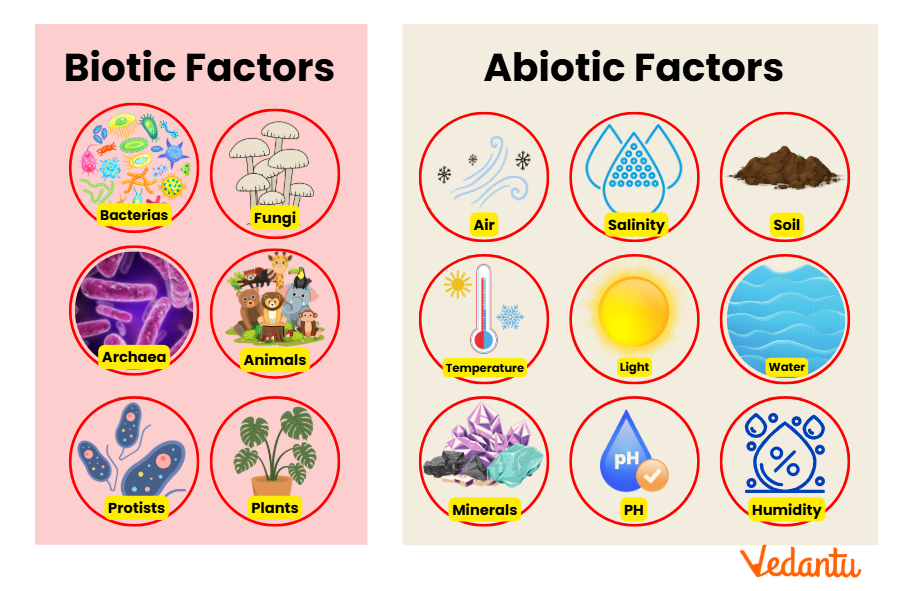
- Biotic
factors – all living things: plants, animals,
fungi, bacteria, and other organisms.
- Abiotic
factors – all non-living things: sunlight, water, temperature, air, rocks,
and soil.
Examples of ecosystems:
- A forest with
trees, birds, insects, soil, and streams.
- A pond with
fish, algae, frogs, water, and mud.
- A coral
reef with corals, fish, seaweed, salt water, and rocks.
An ecosystem is a place where living things
and non-living things interact and depend on each other.
Biotic Components of an Ecosystem
The biotic components of an ecosystem can be
divided into three main groups: producers, consumers,
and decomposers.
Producers (Autotrophs)
 |
| Image from Science Facts |
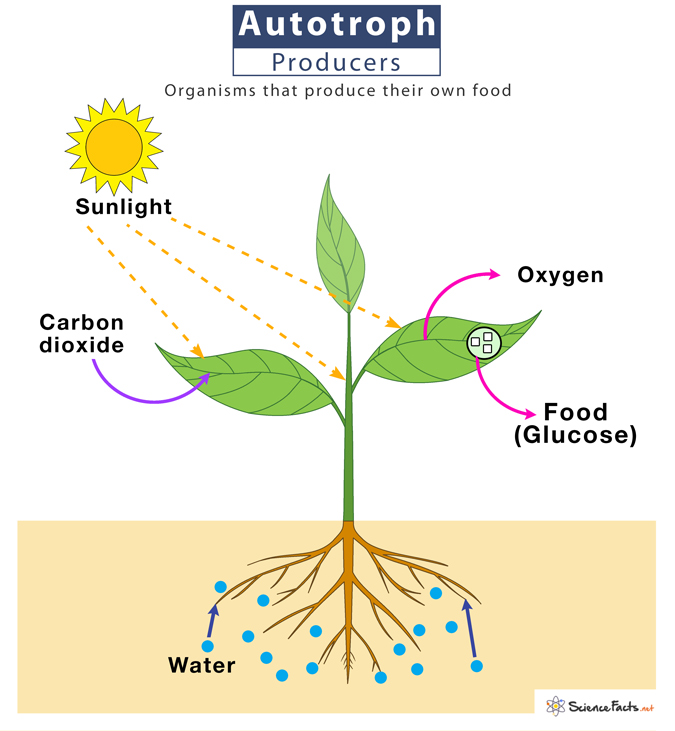
Producers are organisms that can make
their own food.
- Most
producers use photosynthesis to turn sunlight, water,
and carbon dioxide into sugar.
- They
form the base of food chains and food webs.
- All
other organisms depend on producers for energy, either directly or
indirectly.
- Example: green plants,
some algae, and certain bacteria.
Producers like plants are the “food
makers” of the ecosystem because they make their own food using sunlight.
Consumers (Heterotrophs)
 |
| Image from Science Facts |
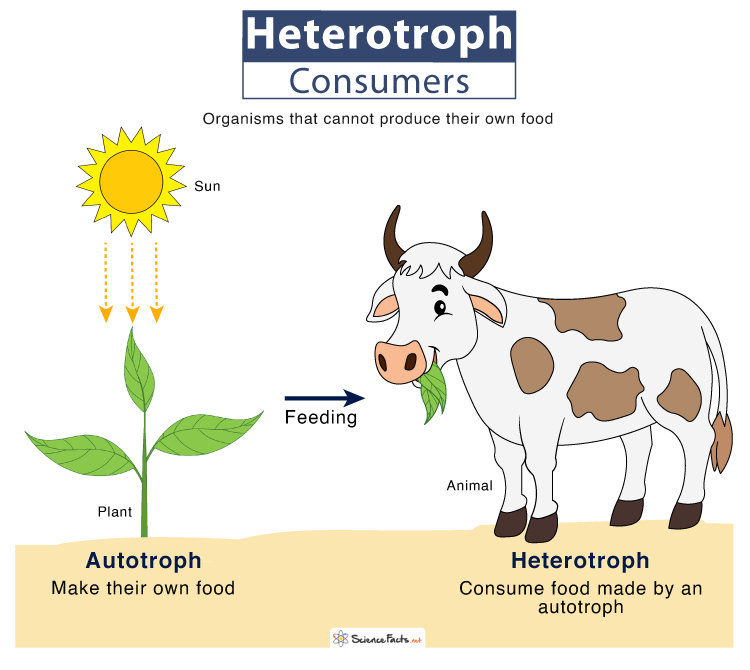
Consumers are organisms that cannot make
their own food and must get energy by eating other organisms. They
are called heterotrophs.
Herbivores
- Herbivores eat
only plants.
- They
feed directly on producers like grass, leaves, fruits,
and seeds.
- Examples: cows,
rabbits, deer, caterpillars.
Herbivores are animals that eat plants.
Carnivores
 |
| Image from Workybooks |
- Carnivores feed
on other animals.
- They
may hunt live prey or eat already dead animals.
- Examples: lions,
tigers, wolves, eagles.
Carnivores are animals that eat other
animals.
Omnivores
 |
| Image from GeeksforGeeks |
- Omnivores eat both
plants and animals.
- They
can switch between plant food and meat depending on what is
available.
- Examples: humans,
bears, pigs, some birds.
Omnivores eat a mix of plant foods and
animal foods.
Scavengers
 |
| Image from Dreamstime |
- Scavengers feed
on decaying and necrotic (dead) matter.
- They help
clean up the environment by eating carcasses and leftovers.
- Example: vultures,
hyenas, crows.
Scavengers are animals that eat dead and rotting
animals instead of hunting fresh prey.
Decomposers (Saprophytes)
 |
| Image from Biology Online |
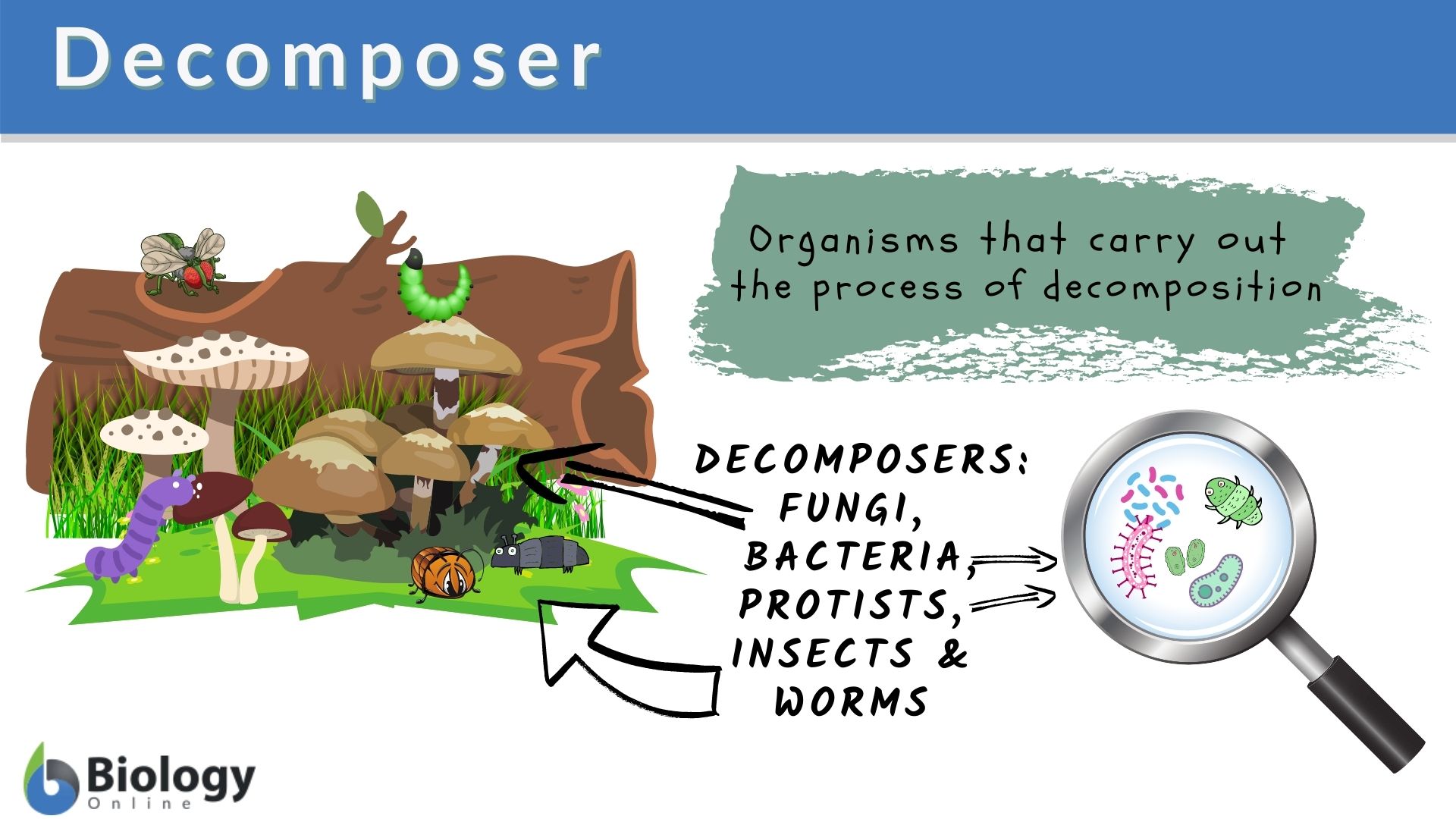
Decomposers, also called saprophytes,
break down dead organisms and wastes.
- They turn
complex dead material into simpler substances like minerals and
nutrients.
- These
nutrients return to the soil and can be reused by producers.
- Examples: bacteria and fungi.
Decomposers are nature’s recyclers they break
down dead things and return nutrients to the environment.
Food Chains and Food Webs - in an ecosystem, energy flows from one organism to another through feeding relationships.
Food Chain
 |
| Image from Freepik |
A food chain shows a simple, straight line
of “who eats whom.”
- Starts
with a producer (plant).
- Then
a herbivore eats the plant.
- Then
a carnivore or omnivore eats the
herbivore.
- Decomposers
eventually break down all dead organisms.
Example food chain:
Grass → Grasshopper → Frog → Snake → Hawk
A food chain is a simple line that shows how
energy passes from plants to animals.
Food Web
 |
| Image from Shalom Education |
A food web is made of many food
chains connected together.
- Shows
that animals usually eat more than one kind of food.
- More
realistic than a single food chain.
- Helps
ecologists understand what happens if one species disappears.
A food web is like a map of all the feeding
connections in an ecosystem.
Ecological Relationships - organisms in an ecosystem do not live alone; they interact with each other in different ways. These interactions are called ecological relationships.
Competition
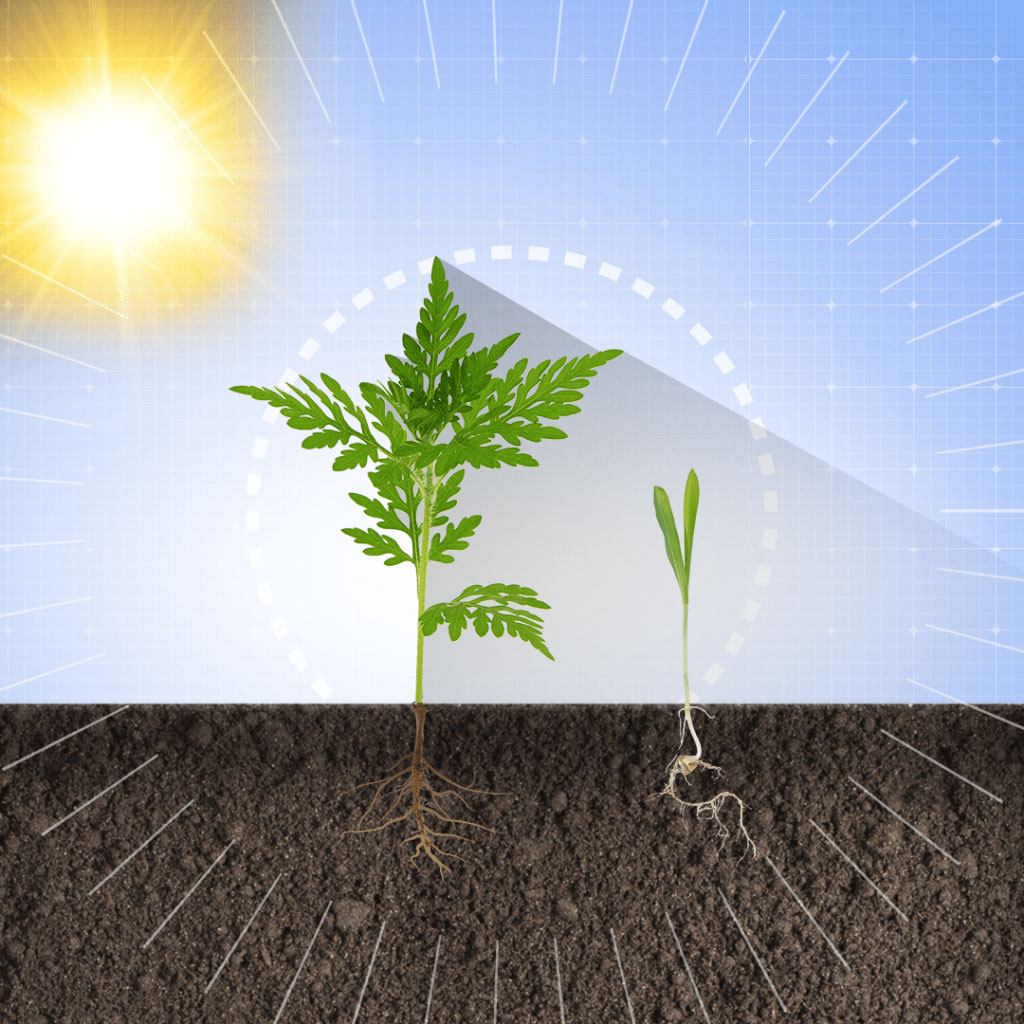
Competition happens when organisms fight or struggle for the same limited resource.
 |
| Image from Bayer Crop Science |
- They
may compete for food, water, space, light,
or mates.
- Competition
can occur within one species (e.g., two trees competing for sunlight) or
between different species (e.g., lions and hyenas competing for prey).
Competition is when living things want the same
resource and there is not enough for everyone.
Predation
 |
| Image from COSMOS Education |
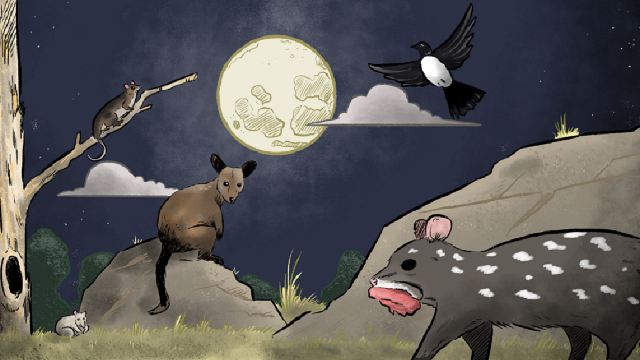
Predation is an interaction where one organism,
the predator, hunts, kills, and eats another organism,
the prey.
- The predator gets food
and energy.
- The prey is
harmed because it is eaten.
- Predation
helps control the population of prey species and keeps the
ecosystem balanced.
Examples of predation:
- A lion hunting
a zebra.
- An eagle catching
a fish.
- A frog eating
an insect.
In predation, one animal (the predator) eats
another animal (the prey).
Symbiosis
Symbiosis is a close, long-term relationship
between two different species. There are three main types: mutualism, parasitism,
and commensalism.
 |
| Image from Science Notes |
Mutualism (+, +)
In mutualism, both organisms benefit from
the relationship.
- Each
partner receives something helpful, such as food, protection, or cleaning.
- Both
species are better off together than alone.
In mutualism, it is a “win–win” relationship
because both organisms are helped.
Parasitism (+, −)
In parasitism, one organism benefits (the parasite)
and the other is harmed (the host).
- The parasite usually
lives on or inside the host.
- The host loses
nutrients or gets sick, but is usually not killed immediately.
In parasitism, the parasite benefits while the
host is harmed.
Commensalism (+, 0)
In commensalism, one organism benefits and
the other is neither helped nor harmed.
- The
unaffected organism is simply used as a surface, shelter, or transport.
- The
relationship is neutral for one partner.
In commensalism, one organism gains something
while the other does not really notice.
Ecosystem Quiz: click here
